

-
vigilantinvestigationagency@gmail.com
Send Email
-
Bharthal, Dwarka Sector 26, New Delhi – 110077, India
Visit Our Office
+91 62-995 5-3308
Confidentiality Guaranteed
+91 62-995 5-3308
Confidentiality Guaranteed
Blog Details
-
vigilant Investigation Agency. > Crime News > Delhi Police EOW Arrests Man in ₹4.6 Crore Dehradun Property Fraud Case
15
Sep
Sep
Delhi Police EOW Arrests Man in ₹4.6 Crore Dehradun Property Fraud Case
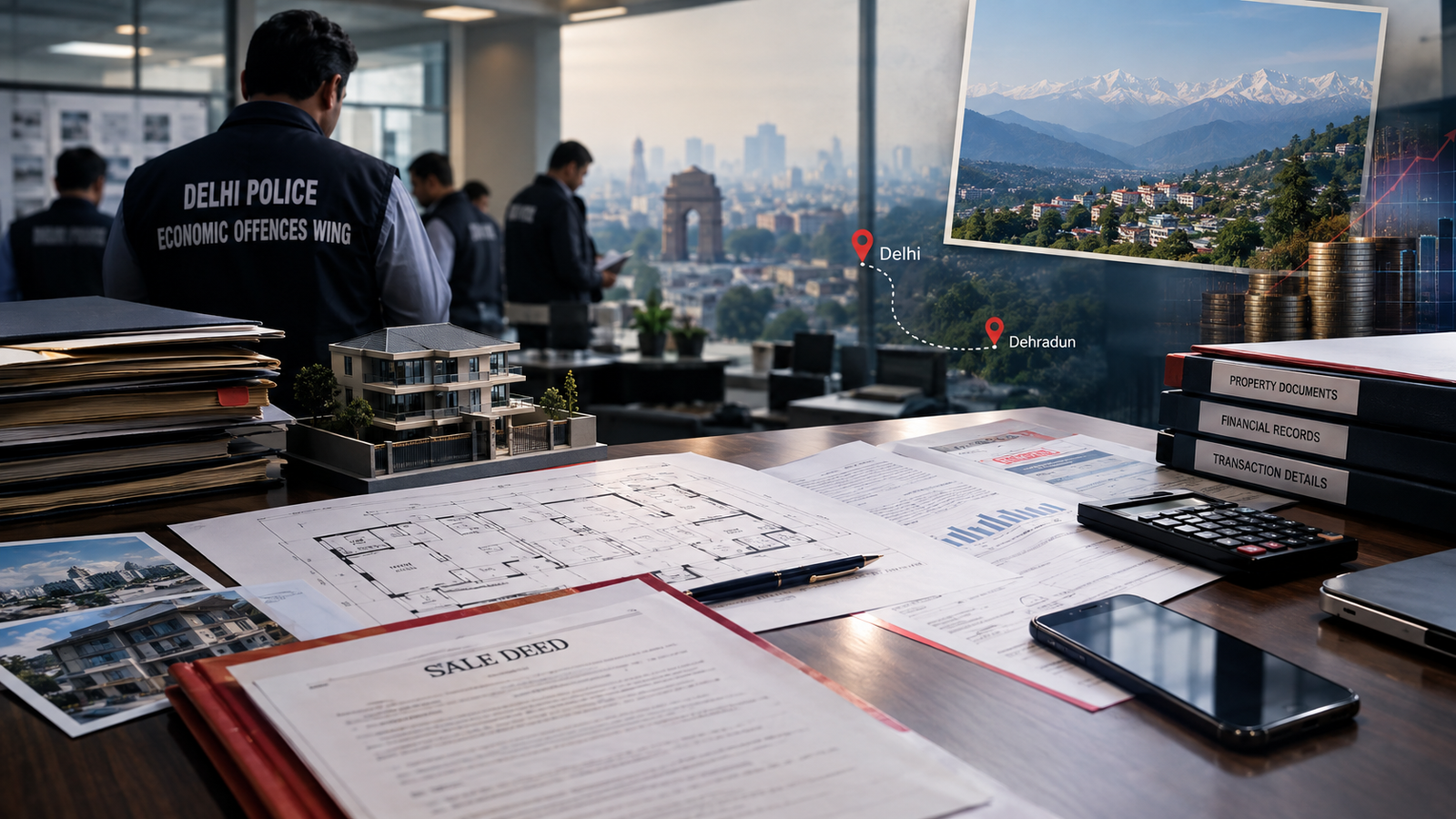
A property dispute involving multiple land transactions in Dehradun has led to an arrest by the Economic Offences Wing (EOW) of the Delhi Police. Investigators have accused a 38-year-old man of allegedly cheating a Delhi-based complainant of approximately ₹4.60 crore through property-related transactions in Uttarakhand.
The case highlights the risks involved in high-value property transactions where the authority of a seller or representative is not properly verified before large payments are made.
Accused Arrested in Property Fraud Investigation
According to police, the accused has been identified as Kunwar Javed Rao. He was reportedly traced to Laksar near Haridwar after investigators carried out technical surveillance, location analysis and field verification.
Police said Rao was apprehended on September 9 and subsequently arrested in connection with the case.
The investigation was initiated after a complaint was filed with the EOW by Prameet Singh, a resident of Punjabi Bagh, Delhi. An FIR was registered at the EOW police station on June 11 in connection with the alleged fraudulent property transactions.
Alleged Fraud Involving Dehradun Land
The investigation relates to land situated in Mauja Domegaon in Dehradun, Uttarakhand.
Police allege that Rao presented himself as an authorised General Power of Attorney (GPA) holder for the landowner, identified as Harjinder Pal Singh Banga.
According to investigators, this representation allegedly enabled him to approach prospective buyers and enter into agreements to sell and sale deeds involving the property.
The police have alleged that some of the transactions went beyond the authority granted to Rao under the registered GPAs.
Investigators further alleged that Rao received substantial sums from prospective purchasers. One Delhi-based complainant is reported to have transferred approximately ₹4.60 crore through banking channels.
Multiple Transactions Under Investigation
One of the major aspects of the investigation is the alleged involvement of multiple transactions concerning the same or overlapping parcels of land.
According to the police, investigators examined the property documents to determine the authority under which the transactions were conducted and whether the land was legally available for sale in each case.
The EOW reportedly examined documents including:
Registered General Power of Attorney documents
Agreements to sell
Sale deeds
Property-related records
Banking transactions connected with the payments
The documents were also reportedly verified with the concerned Sub-Registrar Office in Dehradun.
Buyers Were Allegedly Targeted Through Property Deals
Police suspect that prospective buyers interested in property in Uttarakhand were allegedly approached through claims of having the authority to deal with the land.
The investigation suggests that some of the potential buyers were interested in purchasing property in the hill region for purposes such as vacation homes or second residences.
According to the police version, the accused allegedly used his claimed authority over the property to convince prospective buyers to enter into transactions and make significant financial payments.
However, investigators later examined whether the authority provided through the GPAs actually permitted all the transactions that were carried out.
Investigation Traced the Financial Trail
The EOW has also examined the financial trail connected with the alleged ₹4.60 crore payment.
Investigators reportedly recorded statements from the complainant, the landowner, other prospective purchasers and witnesses associated with the transactions.
The financial records were examined to establish how the money moved following the property-related agreements.
Such financial tracing can be an important part of a property fraud investigation because it helps investigators establish the movement of funds and identify individuals or accounts potentially connected with the alleged transaction.
Accused Allegedly Avoided Investigation
Police said Rao did not cooperate with the investigation despite repeated notices.
According to investigators, he allegedly changed mobile numbers and moved between several locations, including areas in Haridwar, Dehradun, Saharanpur and Muzaffarnagar.
The EOW reportedly used technical surveillance and field verification to track his movements.
The investigation eventually led police to Laksar near Haridwar, where he was apprehended.
Previous Cases Also Identified
During the investigation, police reportedly identified two previous cases associated with Rao.
One case was registered at the Capital Police Station in Bhubaneswar, Odisha, while another was registered at the Rajpur Police Station in Dehradun, according to the police.
The identification of previous cases is likely to be examined further as investigators determine whether there are similarities between those matters and the current property transaction allegations.
Rao’s Background in Property Dealing
According to the police, Rao studied up to Class VIII at a government school in Haridwar.
Investigators said he entered the property business in 2017 and subsequently dealt in properties in Haridwar and Dehradun.
The current investigation is examining the nature of his property dealings and the transactions allegedly carried out using the GPAs.
Why Property Verification Matters
The case also raises important questions about due diligence in high-value property transactions.
A property buyer may verify more than just the identity of the person selling or representing a property. Documents establishing ownership, authority to sell, previous transactions, registration records and the status of the property can all be important before making a major financial commitment.
A General Power of Attorney, for example, does not automatically mean that every possible transaction involving a property is authorised. The exact terms and legal scope of the document need to be examined carefully.
Similarly, agreements and sale documents should be checked against official registration records and the underlying ownership documents.
Investigation Is Still Continuing
The arrest is an important development, but the allegations remain subject to investigation and legal proceedings.
The EOW is continuing to examine the property documents, financial transactions, statements of the people involved and the alleged authority under which the transactions were conducted.
Further details may emerge as investigators analyse the complete transaction history and determine whether additional individuals or transactions are connected with the case.
Conclusion
The alleged ₹4.60 crore Dehradun property fraud case investigated by the Delhi Police EOW demonstrates how complicated land transactions can become when questions arise over ownership authority, multiple sale agreements and large financial transfers.
For buyers, particularly those purchasing property outside their home city or state, independent verification of ownership and transaction documents can be an important part of responsible property due diligence.
The present case remains under investigation, and allegations against the accused will be subject to the judicial process.

