Send Email
Visit Our Office
Confidentiality Guaranteed
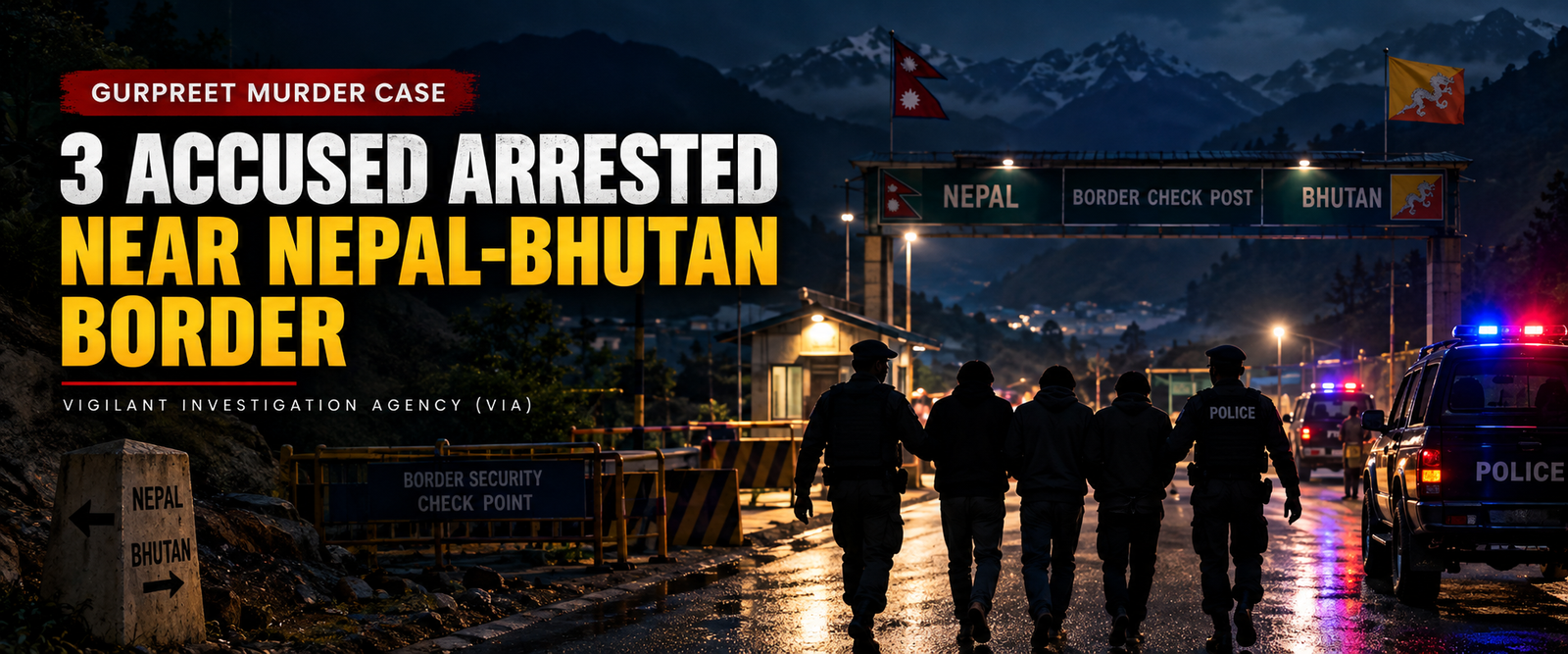
The Gurpreet Murder Case has taken a significant turn after police arrested three accused near the Nepal-Bhutan border, according to information released during the investigation. The arrests were carried out with coordination between police teams from different regions and assistance from authorities in Nepal and Bhutan.
The case relates to an attack in Pehowa, Kurukshetra, in which Gurpreet Singh suffered serious injuries and later died during treatment. Police are continuing to investigate the circumstances surrounding the attack, the alleged involvement of each accused and their movements after the incident.
According to police information, three accused identified as Karn and Jashandeep, residents of Pehowa, and Ashish, a resident of Jind, were arrested near the Nepal-Bhutan border.
Investigators reportedly received information that the suspects could attempt to leave the country. Following the information, police teams intensified their efforts to trace them and coordinated with agencies operating in the border region.
The arrests are an important development in the Gurpreet Murder Case, particularly because the suspects were allegedly attempting to remain outside the immediate reach of investigators.
The accused will now face further questioning as part of the investigation. Police are expected to examine their movements, contacts and activities following the incident.
According to the complaint registered with police, the incident occurred on September 14 in the Pehowa area of Kurukshetra.
Gurpreet Singh was travelling with Gagandeep Singh when a dispute reportedly developed involving another vehicle. The disagreement allegedly escalated after the vehicles stopped at another location.
According to the complaint, an assault then took place in which swords and sticks were allegedly used.
Gurpreet Singh and Gagandeep Singh sustained injuries during the incident. They were subsequently taken to LNJP Hospital for medical treatment.
The exact sequence of events and the individual role of each accused remain part of the police investigation.
Gurpreet Singh died during treatment on September 19, according to police information.
His death changed the nature of the investigation and led to further action against those suspected of involvement in the assault.
The incident also resulted in anger among family members and local residents. The family reportedly demanded that the accused be arrested and staged a protest.
Following assurances from police officials, investigators continued efforts to locate the suspects who had allegedly fled after the incident.
Before the three arrests near the Nepal-Bhutan border, police had also arrested three people who were allegedly involved in helping the main accused hide or escape.
Investigators are now expected to examine whether there was a wider network assisting the suspects after the attack.
The questioning of the newly arrested accused could provide information about where they travelled after leaving the area, whom they contacted and how they managed to reach the border region.
These details could help investigators establish a clearer timeline of events following the attack.
One important aspect of the Gurpreet Murder Case is the reported coordination between law-enforcement agencies across different jurisdictions.
When suspects move from one state to another or attempt to leave the country, investigators may need to coordinate with multiple police and security agencies. Such cooperation can become important for tracking movements and preventing suspects from avoiding investigation.
In this case, police reportedly worked with authorities in Nepal and Bhutan while tracing the accused near the border.
The investigation will now focus on bringing the arrested suspects back to Kurukshetra and questioning them about the case.
Investigators are expected to examine several aspects of the case, including the reason behind the original dispute, the sequence of the alleged attack, the role of each accused and the route used by the suspects after the incident.
Police may also examine available evidence, witness statements, communication records and other information relevant to establishing the movements of the accused.
The investigation may help determine whether additional people were involved in the incident or in helping the suspects evade arrest.
For investigators, establishing a reliable timeline can be particularly important in cases where suspects allegedly leave the area after a serious crime.
The arrest of three accused near the Nepal-Bhutan border is a significant development in the Gurpreet Murder Case, but the investigation is not yet over.
Police will continue collecting evidence and questioning the arrested suspects. Further legal proceedings will determine the next stage of the case.
It is important to remember that an arrest or police allegation does not by itself establish guilt. The accused are entitled to due legal process, and the final determination of guilt will be made by the court.
Vigilant Investigation Agency will continue to focus on verified crime and investigation developments while avoiding speculation about the guilt of individuals before the completion of the legal process.