Send Email
Visit Our Office
Confidentiality Guaranteed
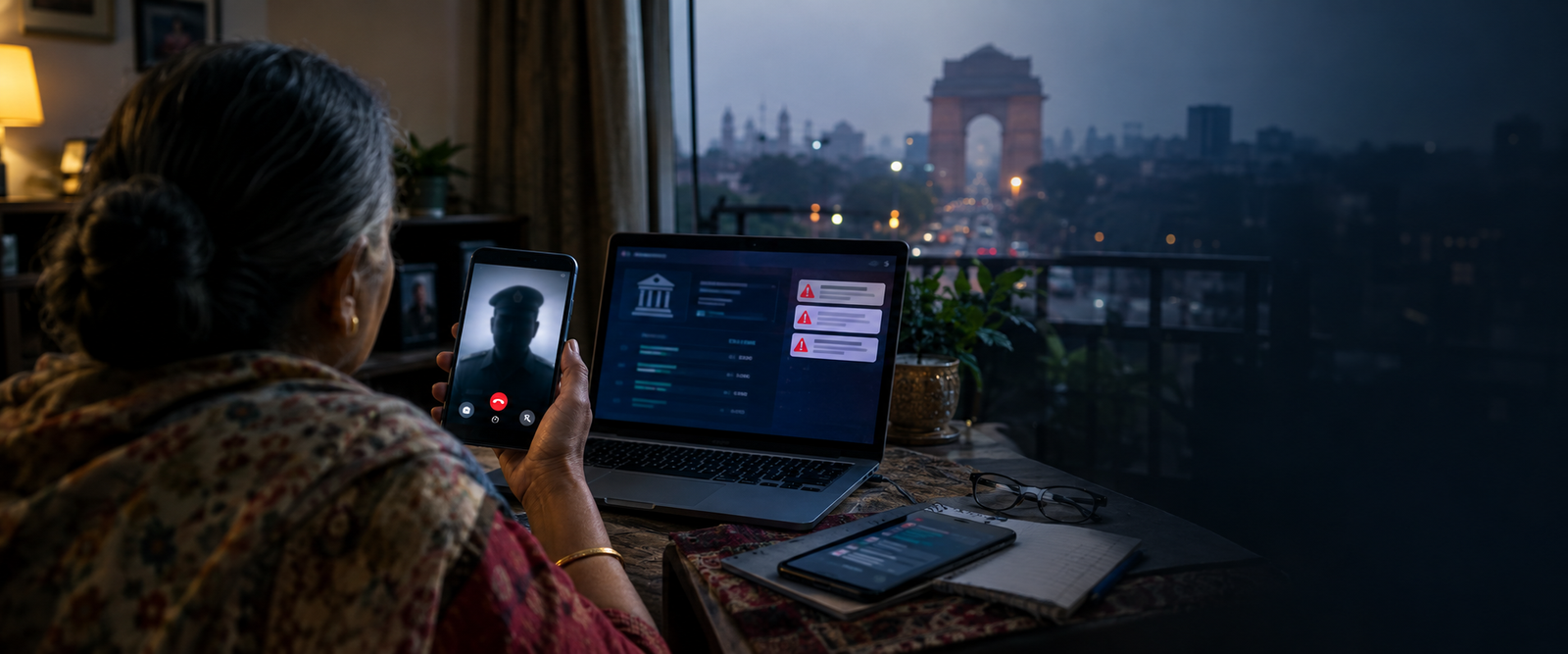
An 88-year-old woman from Sarita Vihar in southeast Delhi has allegedly lost around ₹78 lakh after cybercriminals placed her under what is commonly described as a “digital arrest” for approximately 10 days.
According to a report published on September 16, 2026, the fraudsters allegedly convinced the elderly woman that she was connected to a money-laundering case. Under this false pretext, she was pressured into transferring large amounts of money from her bank accounts.
The incident is now being investigated by the authorities, with efforts focused on identifying the people behind the fraud and tracing the transferred funds.
In a digital-arrest scam, criminals typically impersonate police officers, investigators, government officials or other authorities through phone calls and video calls.
The victim may be falsely told that their identity documents, mobile number, bank account or another asset has been connected to a criminal investigation.
The scammers then attempt to create fear and urgency. Victims may be instructed to remain on a video call, avoid contacting relatives or friends, and follow instructions relating to their bank accounts.
In the Sarita Vihar case, the elderly woman was allegedly made to believe that she was involved in a money-laundering investigation. The fraudsters reportedly used this story to pressure her into transferring approximately ₹78 lakh.
Cybercriminals often rely on fear rather than technical hacking.
An unexpected call from someone claiming to be a police officer, court official or government investigator can appear convincing, particularly when the caller uses official-sounding language and claims that an arrest is imminent.
Older people may also be less familiar with newer forms of online financial fraud. Once a victim becomes frightened, the scammer can use repeated calls and instructions to prevent the person from taking a moment to verify the claim independently.
This is why awareness within families is important. Elderly family members should know that receiving an unexpected call from an alleged official does not mean that they must immediately transfer money or reveal banking information.
People should remember an important point: a genuine law-enforcement process does not require a person to transfer money simply to prove innocence or avoid arrest through a video call.
If someone claims to be a police officer, investigator or government official and demands money, OTPs, banking credentials or remote access to a phone or computer, the call should be treated as suspicious.
Do not panic. Do not transfer money simply because the caller threatens arrest or legal action.
If someone claims that you are involved in a criminal case, take the following precautions:
Stay calm and do not make an immediate payment.
Do not share OTPs, PINs, passwords, card details or internet-banking credentials.
Do not install an application or give remote access to your phone or computer at the caller’s request.
Do not allow an unknown caller to pressure you into keeping the conversation secret from your family.
Independently verify the identity of the person claiming to be an official.
Contact your bank immediately if you have already transferred money.
Report the incident to the appropriate cybercrime authorities as quickly as possible.
Preserve call records, messages, screenshots, transaction details and other relevant evidence.
Family members can play an important role in protecting elderly relatives.
A simple family rule can make a significant difference: no large financial transfer should be made because of an unexpected phone or video call without first discussing it with a trusted family member.
Children and relatives can also explain common cyber-fraud techniques to elderly parents and grandparents. Regular conversations about online safety may make it easier for a potential victim to recognise suspicious behaviour before money is transferred.
The Sarita Vihar incident is being investigated as authorities work to identify those allegedly responsible and trace the money transferred from the victim’s accounts.
The case also highlights how cybercriminals can combine impersonation, fear and financial pressure to target individuals.
The reported loss of approximately ₹78 lakh demonstrates the potential financial impact of such scams, particularly when victims are manipulated over an extended period.
A legitimate investigation should not be used as a reason to demand an immediate transfer of money through a phone or video call.
If a caller threatens you with arrest, tells you that your bank account is connected to a criminal case, or demands money to “clear” your name, stop the conversation and independently verify the claim.
Most importantly, do not allow fear to make financial decisions for you.
Cyber fraudsters depend on urgency, secrecy and intimidation. Taking a few minutes to verify a claim can prevent a major financial loss.
The Sarita Vihar case is a reminder that digital-arrest scams can target people of any background and that awareness remains one of the strongest forms of protection against this type of cybercrime.
The allegations and details reported in this article are based on available reports about the incident. The investigation is ongoing, and further facts may emerge as authorities continue their inquiry.