
Send Email
Visit Our Office
Confidentiality Guaranteed
WhatsApp has become part of everyday life for millions of people. We use it to talk to family, stay in touch with friends, discuss work, share documents and even communicate with businesses.
But the same convenience has also made WhatsApp useful for scammers.
Common WhatsApp frauds are not always complicated. In many cases, the scam starts with a simple message that looks completely normal. Someone may claim to be a bank employee, a friend, a recruiter, a customer-care representative or even a relative who urgently needs help.
The problem is that once trust is created, the conversation can quickly turn into a request for money or sensitive information.
Here are some common WhatsApp scams people should be aware of.
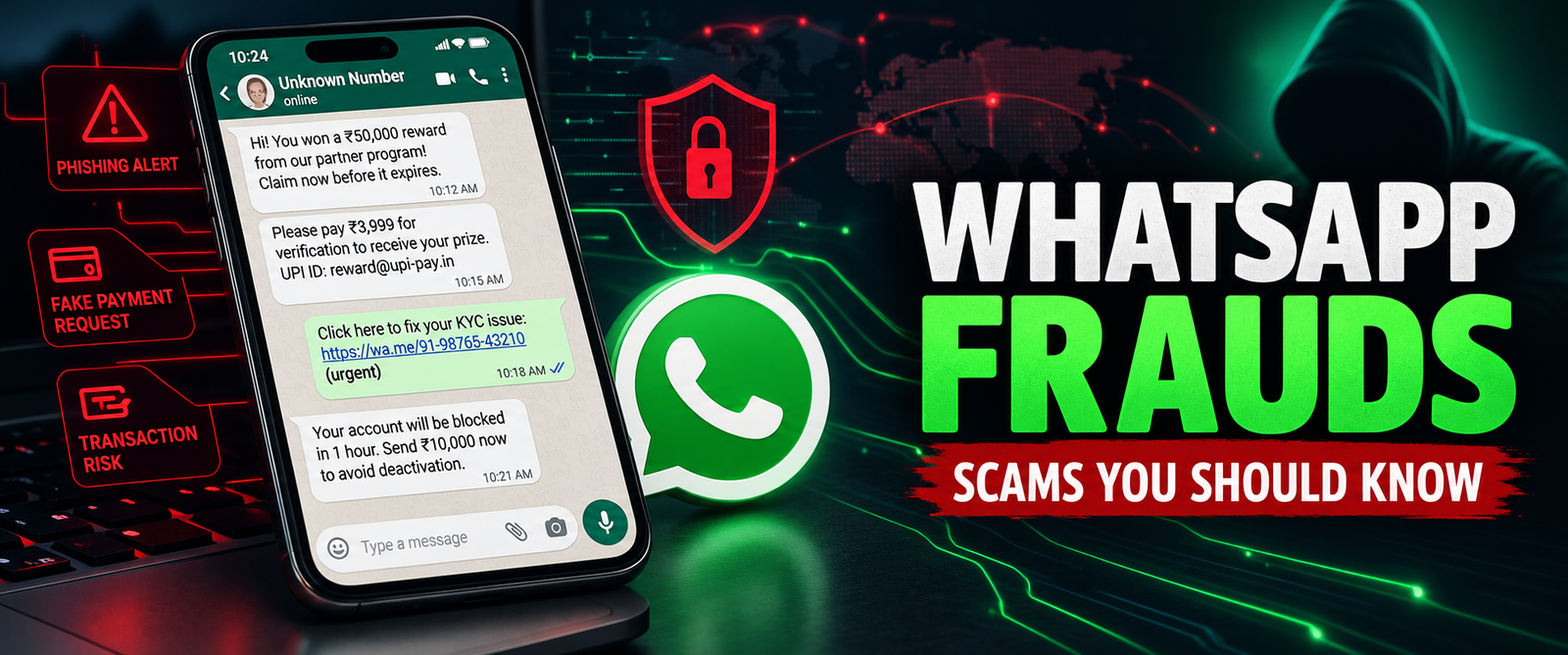
One common trick involves a message claiming that your bank account, SIM card or another financial service needs an urgent KYC update.
The message may contain a link and ask you to verify your details. The person on the other side may then ask for an OTP, card information, PIN or other banking details.
A genuine-looking message does not automatically mean it is genuine. If you receive such a request, contact the bank through its official website or customer-care number instead of using the contact details provided in the message.
Job scams are another common problem on WhatsApp.
A person may contact you with an attractive work-from-home opportunity and promise easy tasks with surprisingly high earnings. Sometimes the conversation starts casually and becomes more convincing over time.
Eventually, the person may ask for a registration fee, security deposit or payment to unlock higher-paying tasks.
A simple rule can help here: be extremely cautious if someone asks you to pay money before giving you a job.
Investment scams can look very convincing, especially when the scammer uses screenshots showing large profits.
You may be added to a WhatsApp group where several accounts appear to be discussing successful investments. Some of these participants may actually be part of the scam.
The person may initially encourage a small investment and later push for larger amounts. When the victim tries to withdraw the money, additional fees or charges may suddenly appear.
Never invest simply because someone on WhatsApp promises quick or guaranteed returns.
This one can be surprisingly effective because it uses an existing relationship.
Someone may use a friend or relative’s photograph and send a message saying their phone is broken, they are travelling or they are facing an emergency.
The request is usually urgent: “I need the money right now.”
Before transferring anything, call the person directly using a number you already have. A few seconds of verification can prevent a costly mistake.
People often search online for customer-support numbers when they have a problem with a product, delivery or online service.
Scammers can take advantage of this by pretending to be customer-care representatives on WhatsApp.
They may ask you to install an application, share an OTP or make a small payment for verification.
Always find customer-care information through the company’s official website or verified application rather than trusting an unknown WhatsApp number.
WhatsApp is also used to circulate attractive deals on phones, electronics, tickets, clothing and other products.
The price may look unusually good, which creates pressure to pay quickly. After receiving the money, the seller may stop responding.
Another trick is sending a fake payment screenshot and claiming that money has already been transferred.
Never rely only on a screenshot. Check your actual bank or payment account before considering a payment received.
Messages saying “Congratulations, you have won a prize” are still used to target unsuspecting people.
The victim may be told to pay a processing fee, tax or registration charge before receiving the prize.
If you never entered a contest or lottery, there is an obvious reason to question such a message.
The most useful habit is to slow down when a message creates urgency.
Do not share OTPs, UPI PINs, passwords, card PINs, CVVs or banking credentials with anyone over WhatsApp. Avoid opening suspicious links and do not install applications simply because an unknown person tells you to.
It is also worth reviewing your WhatsApp privacy and security settings regularly. Enabling two-step verification can provide an additional layer of protection for your account.
If someone contacts you using the name or photograph of a friend or relative, verify their identity through another channel before sending money.
And if you think you have already been scammed, do not delete the conversation. Keep screenshots, transaction details, phone numbers and other relevant information. These records may be useful when reporting the incident to your bank, payment provider or law-enforcement authorities.
Most people do not fall for a scam because they are careless. Sometimes the message simply arrives at the wrong moment and creates enough pressure to make someone react without checking.
That is exactly why taking a minute to verify an unexpected request can make a big difference.
WhatsApp itself is not the problem. Like any communication platform, it can be misused by people trying to deceive others.
The safest approach is simple: if an unexpected WhatsApp conversation involves money, passwords, financial information or an urgent demand, stop and verify before doing anything.
