

-
vigilantinvestigationagency@gmail.com
Send Email
-
Bharthal, Dwarka Sector 26, New Delhi – 110077, India
Visit Our Office
+91 62-995 5-3308
Confidentiality Guaranteed
+91 62-995 5-3308
Confidentiality Guaranteed
Blog Details
-
vigilant Investigation Agency. > Crime News > Delhi Dating App Scam: Man Allegedly Loses ₹80 Lakh After Online Interaction
16
Sep
Sep
Delhi Dating App Scam: Man Allegedly Loses ₹80 Lakh After Online Interaction
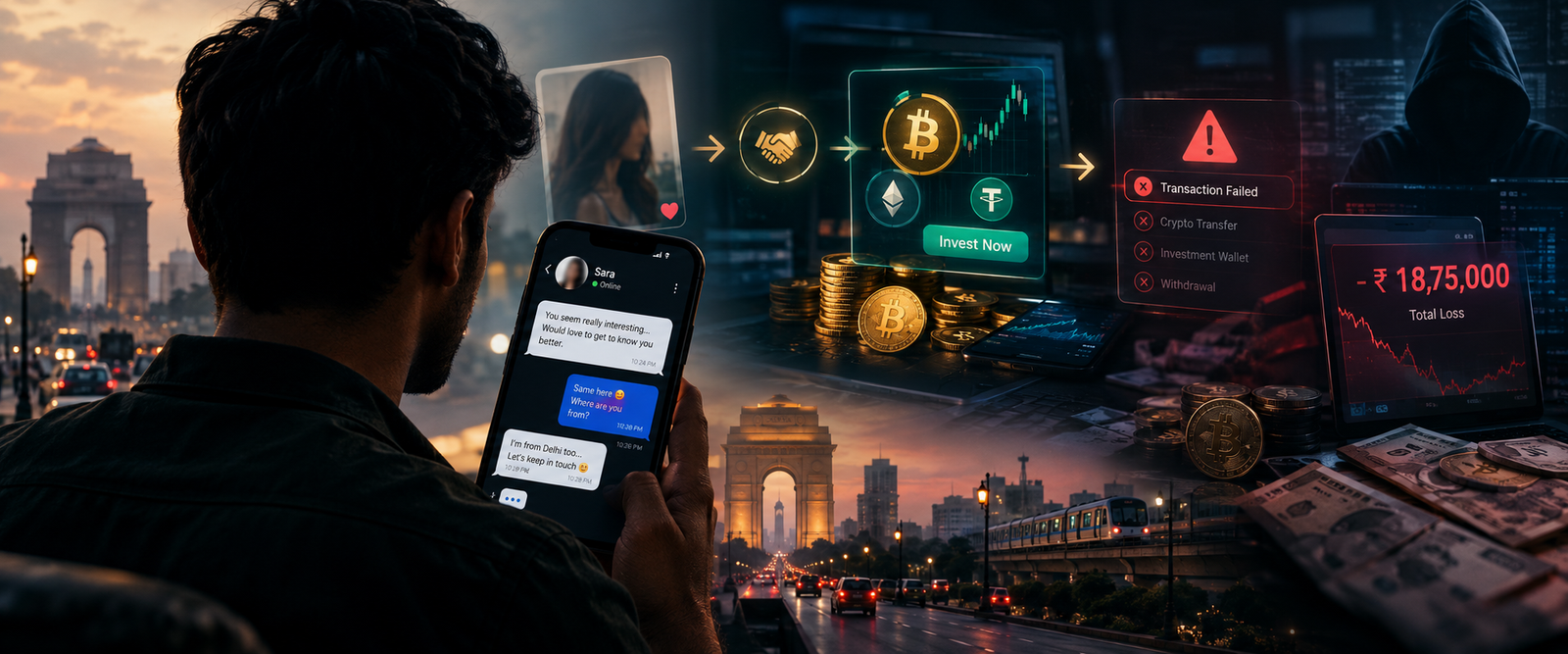
A conversation that began on a dating app allegedly turned into a major financial loss for a 41-year-old man from West Delhi, who reportedly lost more than ₹80 lakh after becoming involved in an online relationship that later developed into a cyber fraud.
The incident, reported on September 16, 2026, highlights a growing concern around scams that use online dating and emotional relationships to gain a person’s trust before targeting them financially.
How the Dating App Interaction Became a Cyber Fraud Case
According to the report, the West Delhi resident initially connected with a person through a dating application. What appeared to be an ordinary online conversation gradually developed into a relationship.
As communication continued, the interaction reportedly moved beyond casual conversations and eventually became connected to financial transactions.
The victim allegedly ended up losing more than ₹80 lakh.
The case demonstrates how online fraud can sometimes begin without an obvious warning. Instead of an immediate request for money, scammers may first attempt to establish familiarity and trust.
Why Dating App Users Can Become Targets
Dating platforms allow people to meet individuals they may never have encountered in their offline lives. While many genuine relationships begin online, the same environment can also be exploited by fraudsters.
A scammer may create an attractive profile, use photographs that do not belong to them, or present a carefully constructed personal story.
Once communication becomes regular, the victim may begin to trust the person behind the profile.
This emotional connection can make financial requests appear more believable.
Financial Loss May Not Happen Immediately
One important warning sign in relationship-based cyber fraud is that financial exploitation may develop gradually.
A person may initially receive a small request or hear a convincing explanation for why money is needed. Later, larger demands may follow.
In some cases, victims may believe they are helping someone they have developed an emotional connection with.
By the time they realise that the relationship may not be genuine, substantial amounts of money may already have been transferred.
The West Delhi case, involving an alleged loss of more than ₹80 lakh, shows how financially damaging such a situation can become.
Common Warning Signs to Watch For
People using dating apps should be particularly careful when an online contact:
Rapidly develops an intense emotional relationship.
Avoids meeting or verifying their identity through reliable means.
Provides inconsistent personal or professional information.
Suddenly introduces financial problems or investment opportunities.
Requests money for emergencies, travel, medical expenses or other urgent reasons.
Pressures the other person to keep financial transactions secret.
Promises unusually high financial returns.
Asks for banking information, OTPs, passwords or other sensitive details.
None of these signs alone proves that a person is involved in fraud. However, several unusual patterns appearing together should encourage greater caution.
Emotional Trust Can Make Online Scams More Difficult to Recognise
Cyber fraud is not always based on technical hacking.
In many relationship-based scams, the most important element can be social engineering — influencing a person through communication, trust and emotional pressure.
This is why even financially experienced or otherwise cautious people can become victims.
The person may not initially feel that they are dealing with a criminal. They may believe they are helping a friend, romantic partner or someone with whom they expect to build a future.
That perception can make it difficult to question requests for money.
What Should Dating App Users Do?
People meeting someone through a dating platform should avoid making important financial decisions solely on the basis of an online relationship.
Identity and major claims should be independently verified before significant trust or financial commitments are made.
Users should also avoid sharing sensitive banking credentials, OTPs, passwords or other confidential information with someone they have met only online.
If money has already been transferred and fraud is suspected, the matter should be reported to the appropriate cybercrime authorities as quickly as possible.
Why This Delhi Case Matters
The reported ₹80 lakh loss is significant, but the broader lesson is about how modern cyber fraud can combine technology with human emotions.
Dating applications provide opportunities for genuine relationships, but they can also provide fraudsters with access to people who may be searching for companionship.
A convincing profile and regular conversations can create a sense of familiarity even when the person behind the account has not been independently verified.
The West Delhi case therefore serves as a reminder that online relationships should be approached with the same level of caution as any other digital interaction involving personal information or money.
Background Verification Can Matter Before Major Decisions
When an online relationship becomes serious, particularly when marriage, large financial commitments or long-term plans are being discussed, verifying important information can help reduce uncertainty.
Identity, employment, marital status, professional claims and other relevant information may be important depending on the circumstances.
Verification does not guarantee that a relationship will succeed. Its purpose is to help distinguish important factual information from claims that have never been independently confirmed.
The Larger Cybercrime Warning
Online dating scams are part of a wider cybercrime environment in which criminals increasingly use social interaction to build trust.
The technology may change, but the basic risk remains the same: a stranger online may not always be the person they claim to be.
People should therefore remain careful before sending money, sharing sensitive information or making major personal decisions based solely on an online relationship.
The Delhi case involving an alleged loss of more than ₹80 lakh is a strong reminder that trust should not replace verification when money and major life decisions are involved.
Final Takeaway
Meeting someone through a dating app is not inherently unsafe, and millions of people use online platforms for genuine relationships.
However, emotional trust should develop alongside reasonable caution.
Before sending money, sharing sensitive information or making major commitments, take time to verify important facts about the person.
A relationship may begin with a simple online conversation, but when financial requests enter the picture, stop, verify and think carefully before taking the next step.

