Send Email
Visit Our Office
Confidentiality Guaranteed
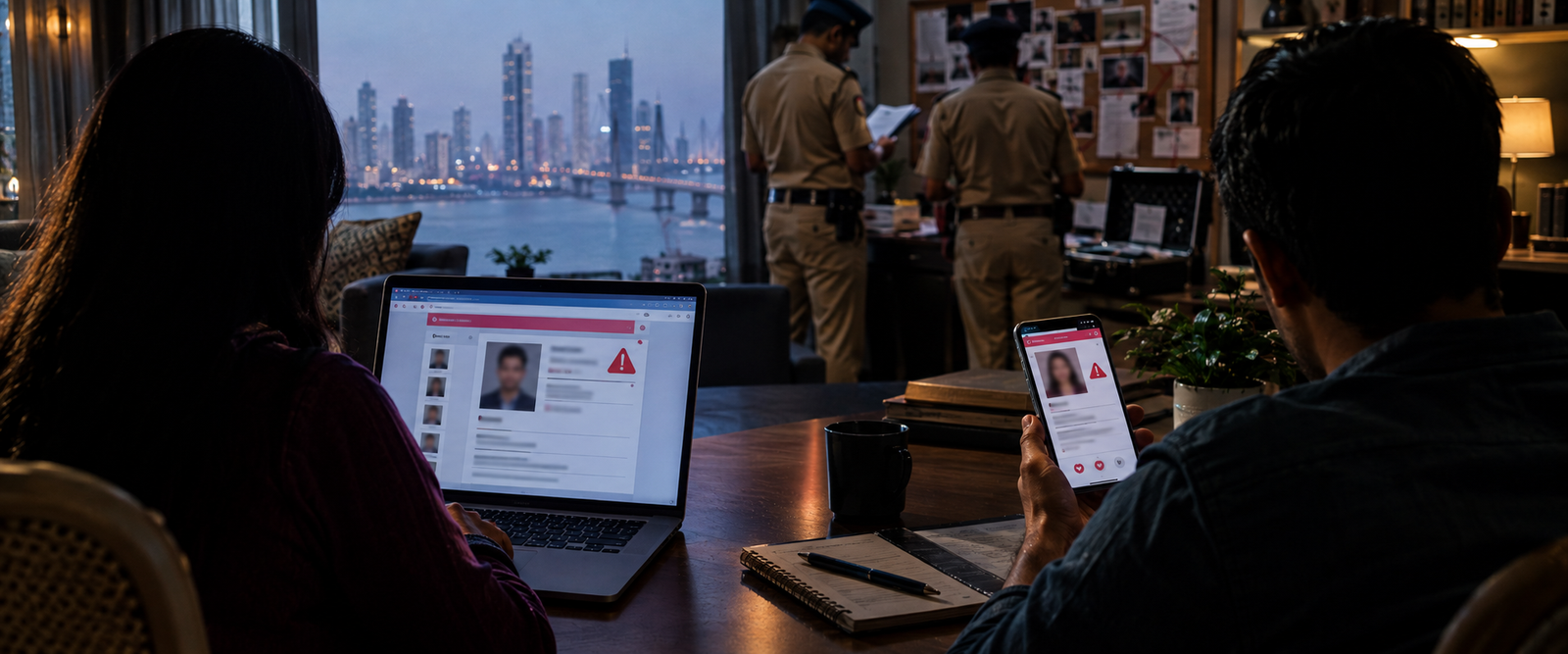
Mumbai Matrimonial Fraud has become the focus of a police investigation after a man was arrested in Vasai in connection with allegations involving a fake identity on a matrimonial website.
According to police, the accused allegedly presented himself as an engineer with a high income while communicating with a woman through an online matrimonial platform. The woman, a doctor, reportedly believed that she was communicating with a genuine marriage prospect.
The case was investigated by Waliv Police in the Vasai area of Maharashtra.
Police said the accused allegedly used another person’s identity while creating or maintaining a matrimonial profile.
During communication with the woman, he reportedly claimed to be an engineer earning around ₹37 lakh annually. The alleged professional and financial details were reportedly presented as part of his matrimonial profile.
The Mumbai Matrimonial Fraud case highlights a wider concern associated with online matrimonial platforms. Information displayed on a profile may include photographs, employment details, education, income and other personal information, but such claims may not always be independently verified.
According to the police complaint, communication between the accused and the woman reportedly progressed toward marriage discussions.
Police allege that the accused later introduced another person into the situation and persuaded the woman to meet that person at a hotel.
Investigators allege that the circumstances surrounding the meeting were different from what the woman had initially understood.
The woman subsequently became suspicious and reportedly learned information that raised questions about the identity of the person she had been communicating with online.
She then approached the police and reported the matter.
Following the complaint, Waliv Police registered a case involving serious allegations including rape and cheating, along with relevant provisions of the Information Technology Act.
Police subsequently traced the accused to Nalasopara and arrested him.
Investigators are examining the alleged use of false identity information, online communications and other digital evidence connected with the complaint.
The arrest is part of the investigation and does not by itself establish guilt. The allegations will be examined through the legal process.
During the investigation, police reportedly found multiple Instagram accounts allegedly associated with the accused.
The discovery of several online accounts is an important part of the investigation because digital identities can sometimes be used to present different personal or professional backgrounds to different people.
In cases involving alleged matrimonial deception, investigators may examine profile information, communication records and other available digital evidence to understand how an online relationship developed.
Online matrimonial platforms are commonly used by people looking for marriage and long term relationships. However, a digital profile should not automatically be considered proof of a person’s identity or background.
A person may provide details about their occupation, income, education, residence or family background that should be independently verified before important decisions are made.
This is particularly important when an online relationship quickly moves toward marriage, financial transactions or the exchange of sensitive personal information.
The Mumbai Matrimonial Fraud case demonstrates why people should remain cautious about accepting important claims without verification.
There are several situations that may require additional caution when communicating with a prospective matrimonial partner online.
A profile containing unusually impressive professional or financial claims should be independently checked. Sudden pressure to meet privately, requests for money or demands to keep certain information secret can also warrant careful consideration.
People should avoid sharing sensitive identity documents, financial information, passwords or private photographs with someone whose identity has not been properly established.
If inconsistencies appear between a person’s profile and the information they provide during conversations, those differences should not simply be ignored.
If someone suspects that a matrimonial profile may be fake, preserving relevant evidence can be important.
Screenshots of profiles, messages, emails, phone numbers and other available digital records may help establish the sequence of communication.
People should avoid deleting conversations or other potentially relevant information before reporting a suspected incident to the appropriate authorities.
Where a financial transaction is involved, payment records and bank information may also be important for an investigation.
The Mumbai Matrimonial Fraud investigation remains ongoing as police examine the allegations and available evidence.
Investigators are reportedly looking into the identity used by the accused, his online accounts and the circumstances surrounding his interactions with the complainant.
The final facts of the case will depend on evidence collected during the investigation and subsequent legal proceedings.
The case is a reminder that online matrimonial relationships can involve risks when important personal information is accepted without independent verification.
A professional designation, attractive income, photographs or a detailed matrimonial profile may create an impression of credibility, but these details should not automatically be treated as confirmed facts.
People considering marriage with someone they have met online can take reasonable steps to verify important information through lawful and appropriate sources before making major personal or financial decisions.
The Mumbai Matrimonial Fraud case continues to be investigated, and further developments may provide additional information about the alleged identity deception and the digital accounts involved.