

-
vigilantinvestigationagency@gmail.com
Send Email
-
Bharthal, Dwarka Sector 26, New Delhi – 110077, India
Visit Our Office
+91 62-995 5-3308
Confidentiality Guaranteed
+91 62-995 5-3308
Confidentiality Guaranteed
Blog Details
-
vigilant Investigation Agency. > News > Modi-Putin Meeting in Delhi: India and Russia Discuss Energy, Defence and Global Security
11
Sep
Sep
Modi-Putin Meeting in Delhi: India and Russia Discuss Energy, Defence and Global Security
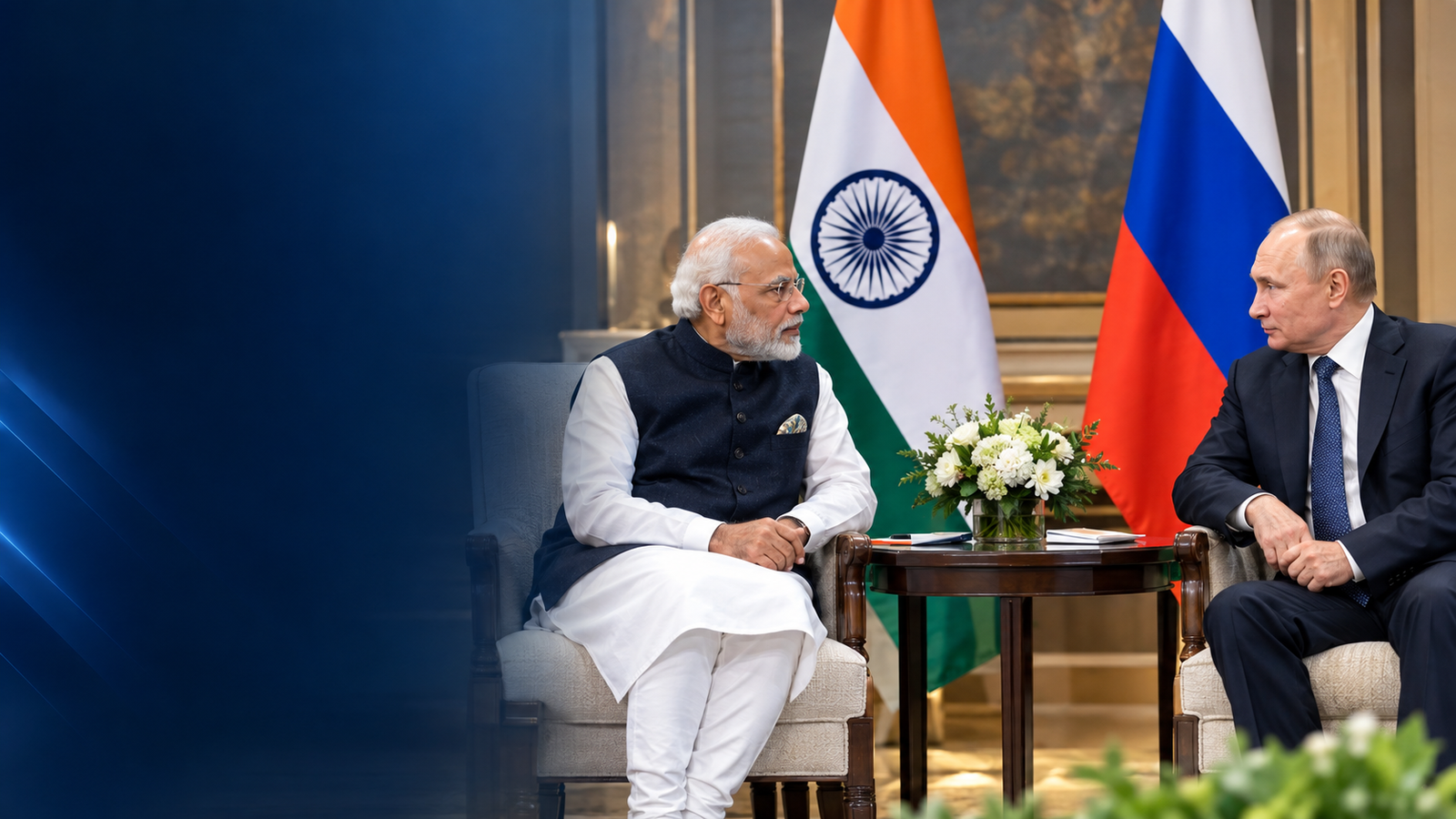
Prime Minister Narendra Modi and Russian President Vladimir Putin held talks in New Delhi on Friday, September 11, 2026, ahead of the BRICS Summit being hosted by India.
The meeting focused on strengthening the long-standing India-Russia strategic partnership, with discussions covering energy, defence, trade and major regional and global developments.
The talks come at a time when international conflicts and disruptions to global trade and shipping routes are creating new challenges for countries around the world. India and Russia also discussed developments in West Asia and the Black Sea region and their impact on maritime trade and the safety of Indian seafarers.
Modi-Putin Meeting Takes Place Ahead of BRICS Summit
President Vladimir Putin arrived in New Delhi on Friday for the BRICS Summit and bilateral engagements with Indian leadership.
His meeting with Prime Minister Narendra Modi comes shortly before the BRICS leaders’ summit in the Indian capital.
The two leaders have already met recently on the sidelines of the Shanghai Cooperation Organisation summit in Bishkek on August 31. Their latest meeting in Delhi highlights the importance both countries continue to place on their bilateral relationship.
Energy Cooperation Remains an Important Issue
Energy cooperation remains one of the most significant areas of India-Russia relations.
India is among the major buyers of Russian crude oil, and Russia has remained an important source of energy supplies for Indian refiners.
Reuters reported that Russian crude accounted for as much as 51% of India’s crude imports in July 2026, with disruptions to supplies from the Middle East contributing to increased reliance on Russian oil.
For India, maintaining reliable and affordable energy supplies remains an important economic priority.
The energy relationship with Russia therefore continues to be closely watched as global markets remain affected by geopolitical tensions and disruptions to international trade.
Defence Cooperation Also on the Agenda
Defence cooperation has traditionally been a major pillar of India-Russia relations.
The two countries have worked together for decades across various defence and military technology programmes.
Ahead of Friday’s meeting, reports indicated that issues involving India’s S-400 air defence system and next-generation BrahMos missile cooperation were among the defence-related matters being watched closely.
India is also looking at ways to expand cooperation beyond a traditional buyer-seller relationship, including greater possibilities for joint development and production.
The broader defence relationship remains strategically important for both countries.
Global Conflicts and Maritime Security Discussed
The meeting also covered major international conflicts.
According to India’s Ministry of External Affairs statement, Modi and Putin exchanged views on conflicts in West Asia and the Black Sea region.
These conflicts have affected maritime trade and created concerns regarding the safety and security of Indian seafarers.
Prime Minister Modi reiterated India’s position that conflicts should be addressed through dialogue and diplomacy and said India was ready to contribute to peace efforts.
This aspect of the meeting is significant because disruptions in major maritime routes can affect shipping, energy supplies, international trade and the wider global economy.
India-Russia Trade Relations
Trade is another major area where India and Russia are seeking stronger cooperation.
The two countries have set an objective of increasing bilateral trade to around $100 billion by 2030, compared with nearly $70 billion in 2024-25, according to Reuters.
Both sides are exploring opportunities across areas such as energy, technology, industry, infrastructure and other strategic sectors.
An India-Russia industrial fair was also held during Putin’s visit, showcasing Russian technology and companies working in areas including artificial intelligence, aviation, space, nuclear science, heavy engineering, mining and banking.
India Balances Relations Amid Global Tensions
The meeting comes at a complicated time in international politics.
India maintains a long-standing relationship with Russia while simultaneously expanding its engagement with the United States, European countries, Gulf nations and other major global powers.
The continuing Russia-Ukraine conflict and tensions in the Middle East have made international diplomacy increasingly complex.
India has repeatedly emphasized dialogue and diplomacy as the preferred approach to resolving major conflicts.
The Modi-Putin meeting therefore carries significance beyond bilateral relations and also reflects India’s broader diplomatic balancing act.
Putin's Visit and the BRICS Summit
Putin’s visit comes just before the BRICS Summit in New Delhi.
The expanded BRICS grouping now includes 11 members and represents a significant share of the world’s population, economic activity and energy resources.
The summit is taking place against the backdrop of conflicts in Ukraine and the Middle East, as well as wider tensions between major global powers.
India’s hosting of the summit provides an opportunity for New Delhi to engage with multiple major powers at the same time.
Technology and Industrial Cooperation
The India-Russia relationship is not limited to energy and defence.
The industrial exhibition associated with Putin’s visit highlighted cooperation and commercial opportunities in several advanced sectors.
These include:
- Artificial Intelligence
- Aviation
- Space Technology
- Nuclear Science
- Heavy Engineering
- Mining
- Banking
- Technology and Infrastructure
Greater cooperation in these areas could help both countries diversify their economic relationship beyond traditional sectors.
Modi Gifts Putin a Russian Translation of Thirukkural
During the visit, Prime Minister Narendra Modi presented President Putin with a Russian-language translation of the Thirukkural, the classical Tamil text attributed to the poet and philosopher Thiruvalluvar.
The work contains 1,330 couplets covering themes including virtue, governance and love.
The gesture added a cultural dimension to the diplomatic engagement between the two leaders.
What Does the Meeting Mean for India?
The Modi-Putin meeting comes at a time when India is dealing with several competing economic and geopolitical pressures.
Energy security, defence preparedness, maritime trade and international diplomacy are closely connected to India’s broader national interests.
Maintaining a stable relationship with Russia allows India to continue cooperation in areas that have strategic importance while New Delhi simultaneously develops relationships with other global powers.
The meeting also demonstrates India’s intention to remain actively engaged in diplomatic discussions surrounding major international conflicts.
What Could Happen Next?
The discussions between Modi and Putin are likely to be followed by further engagement during the BRICS Summit.
Future cooperation could focus on expanding trade, strengthening energy partnerships, advancing defence cooperation and increasing collaboration in technology and industrial sectors.
The extent to which these discussions translate into specific agreements or new projects will become clearer as bilateral and BRICS-level meetings continue.
Conclusion
Prime Minister Narendra Modi and Russian President Vladimir Putin held important talks in New Delhi on September 11, 2026, with energy, defence, trade and international security among the key areas of discussion.
The meeting took place just before the BRICS Summit and comes at a time of significant geopolitical uncertainty.
India and Russia continue to maintain a strategic partnership despite major changes in the global political and economic environment.
From energy security and defence cooperation to maritime trade and global conflicts, the issues discussed by the two leaders have implications that extend beyond the two countries.
The coming days of the BRICS Summit will provide further insight into India’s diplomatic priorities and the future direction of its relationship with Russia.
Disclaimer
This article has been prepared based on publicly available reports and official information available at the time of publication. International developments and diplomatic discussions can change rapidly. The article is intended for news and informational purposes and does not represent the official position of any government unless specifically stated.

