

Latest News
Delhi Airport | Privacy Concern
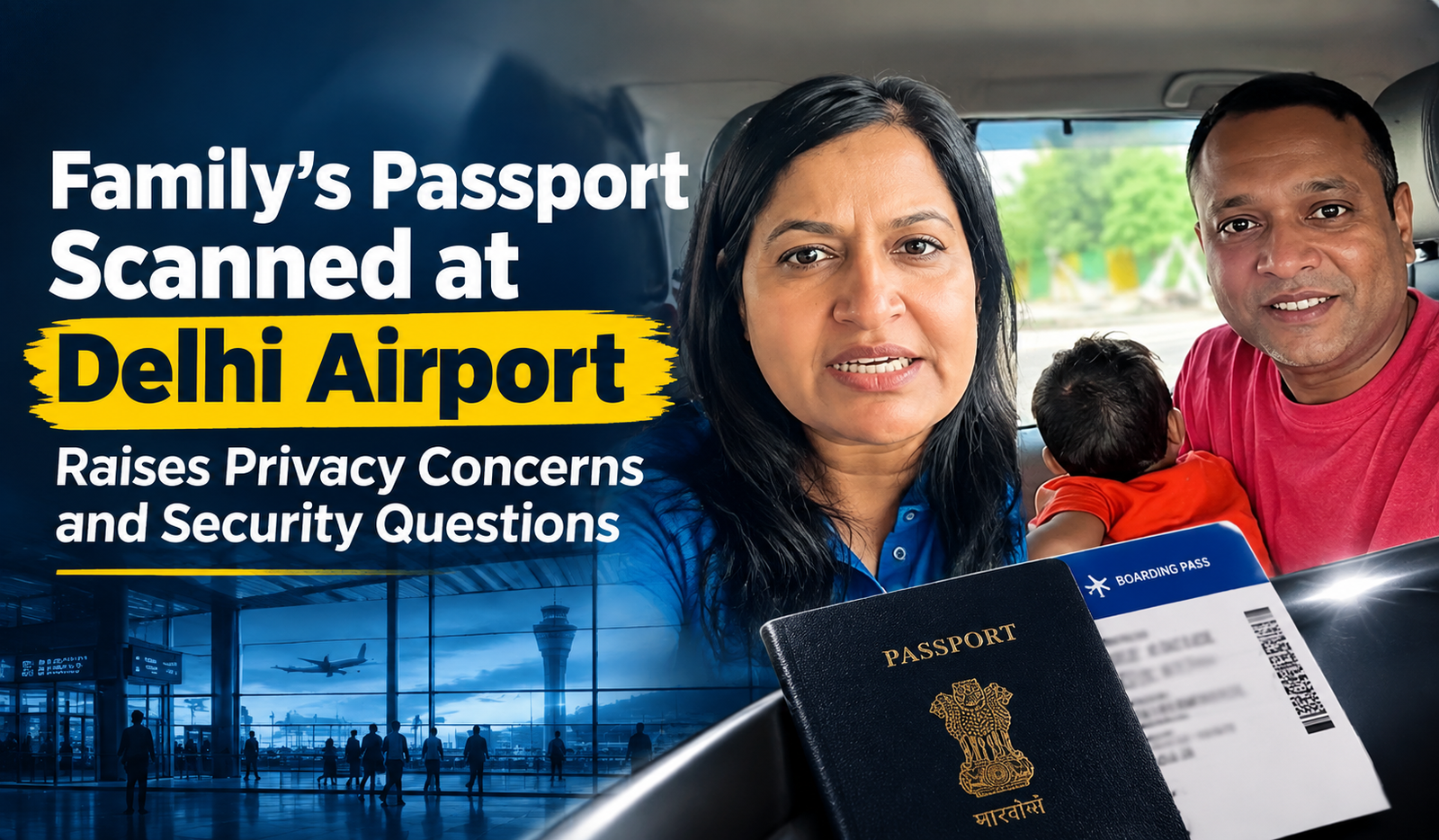
A case involving Delhi’s Indira Gandhi International Airport (IGI Airport) has attracted attention after a US-based Indian family alleged that the passports and boarding passes of several family members were scanned at a Duty-Free store during a purchase.
The family reportedly included two children, and the alleged scanning of their travel documents raised questions about the collection and use of personal information.
According to the family, the purchase was being made by one member of the family, yet documents belonging to other family members were also scanned. This led to concerns about why the additional documents were required and how the information collected through the scanning process was being used.
However, based on the information currently available, it would not be appropriate to describe the incident as a proven “Passport Scam.” The matter is currently understood as a complaint and privacy-related concern that has attracted attention and prompted a response from the concerned authorities and airport-related parties.
What Exactly Happened?
According to media reports, a US-based Indian couple arrived in Delhi with their two children after travelling from the United States.
After completing the immigration process at IGI Airport, the family visited a Duty-Free store.
The family made a purchase at the store. During the transaction, employees reportedly asked for and scanned passports and boarding passes connected with the purchase.
The family alleged that the scanning was not limited to the person actually making the purchase. According to their account, passports belonging to other family members were also scanned, including documents belonging to the children.
This reportedly caused the family to question why the additional passports were required for a single shopping transaction.
Why Did the Family Question the Passport Scanning?
According to the family’s account, their main concern was simple: if one person was making the purchase, why did the passports of other family members need to be scanned?
Reports indicate that the family asked the Duty-Free staff about the reason for the scanning.
They were reportedly told that passport or boarding-pass information could be used in connection with offers or the purchase-related process.
However, the family was not completely satisfied with the explanation.
The concern became more significant because the passports of children were reportedly also scanned.
Why Did the Children’s Passports Become a Major Concern?
One of the most discussed aspects of the incident was the alleged scanning of the children’s passports.
Media reports mention that one of the children was around nine months old.
The family reportedly questioned why a passport belonging to a very young child would be required when the child was not personally making any purchase.
This raised broader questions about the collection of personal information during commercial transactions at an international airport.
The issue therefore moved beyond an ordinary shopping transaction and became a discussion about personal data, privacy and the purpose for which travel documents are collected.
Did the Family Call It a Scam?
IMPORTANT
After the incident was shared publicly and discussed on social media, some reports and online discussions referred to it using terms such as “Passport Scam” or “Airport Scam.”
However, it is important to distinguish between an allegation or concern and a proven offence.
The family has raised questions and expressed concerns about the process. That alone does not establish that their passport information was misused.
At present, there is no confirmed evidence publicly establishing that the family’s passport information was used for fraud, smuggling or any other illegal activity.
Therefore, the incident is more appropriately described at this stage as a passport-scanning and data-privacy concern, rather than a confirmed passport scam.
Is Scanning a Passport Automatically Wrong?
No.
Passport and boarding-pass scanning can be a normal part of various processes at international airports.
Passenger identification, immigration, customs procedures and international purchases may involve verification of travel documents under certain circumstances.
Therefore, the mere fact that a passport was scanned does not automatically mean that fraud or wrongdoing occurred.
The more important questions in this case are:
Was scanning the documents of all family members necessary for that particular transaction?
If it was necessary, what was the specific reason?
If personal information was collected, for what purpose was it collected and how was it handled?
These are the questions that can help determine whether the process was part of a legitimate procedure or whether further clarification was required.
Why Might a Passport Be Required for a Duty-Free Purchase?
Duty-Free shopping at an international airport is different from an ordinary retail transaction.
Passenger status, international travel information, purchase records and applicable customs requirements can be relevant to Duty-Free transactions.
For this reason, there may be situations where a passenger’s travel documents need to be verified.
However, the issue raised by this family is not simply whether passports can ever be scanned during Duty-Free shopping.
The concern is about why multiple members of the same family, including children, were reportedly asked to provide their travel documents during a particular transaction.
That specific question is what brought attention to the incident.
Why Is Data Privacy an Important Issue Here?
A passport contains important personal information about an individual.
Details such as a person’s name, passport number, date of birth and nationality can form part of a person’s identifying information.
Whenever such information is scanned or collected, reasonable questions can arise regarding its purpose and handling.
For example:
- Why was the information collected?
- Where was the information stored?
- Who had access to the information?
- How long would the information be retained?
- Could the information be used for another purpose?
- Was the passenger clearly informed about the reason for the scanning?
The answers to these questions can be important when assessing any complaint involving personal information.
What Was the Response from the Airport and Related Parties?
After the incident came to public attention, the Delhi Airport side reportedly took note of the family’s concerns.
According to reports, the family was contacted or the incident was taken up for review, with efforts to understand what happened during the transaction.
Reports also indicate that the Duty-Free side was involved in addressing the matter and that an internal review or examination of the incident was being considered.
This suggests that the complaint was not simply ignored and that the circumstances surrounding the incident were being looked into.
However, based on the information currently available, no final conclusion establishing wrongdoing has been announced.
Was the Family’s Passport Data Misused?
IMPORTANT DISTINCTION
There is currently no confirmed public evidence establishing that the family’s passport information was misused.
This is an important distinction when reporting the incident.
The family has expressed concern about possible misuse, but a concern is different from proven misuse.
To establish whether any personal information was improperly handled or misused, relevant records could potentially include transaction records, scanning records, CCTV footage, system logs and information about the procedures followed by the staff.
Until such information establishes otherwise, the allegation should be treated as a concern or claim rather than a confirmed case of data misuse.
What Questions Could an Investigation Answer?
If the incident is reviewed in detail, several questions could help establish what actually happened.
1
1. How Many Passports Were Scanned?
One of the first questions would be to determine exactly whose documents were scanned during the transaction.
This could help establish whether the scanning was limited to the purchaser or extended to other family members.
2
2. Why Were the Documents Scanned?
The purpose of the scanning would also be important.
Was it related to purchase verification, offer eligibility, customs requirements or another airport or Duty-Free procedure?
3
3. Was It a Standard Procedure?
If passport scanning of multiple family members is part of the Duty-Free store’s standard procedure, it would be relevant to know whether the same process is followed for other customers in similar circumstances.
4
4. Where Was the Data Stored?
If passport information was scanned and electronically recorded, another important question would be where that information was stored and which authorised personnel or systems could access it.
5
5. What Do CCTV and Transaction Records Show?
CCTV footage and transaction records can sometimes help establish the sequence of events during a disputed incident.
Such records could potentially clarify what documents were presented, which documents were scanned and what took place during the transaction.
Could This Matter Lead to a Larger Investigation?
That would depend on what emerges from any internal review or further examination.
If the review establishes that the passport scanning was part of an authorised and established procedure, the matter could potentially end there.
However, if an unauthorised process, improper collection of information or a privacy-related violation were established, the relevant authorities could consider further action under applicable rules.
At present, there is no confirmed information establishing that such a violation occurred.
Why Did the Incident Gain Attention on Social Media?
Today, a passenger’s personal experience can reach a large audience very quickly through social media.
In this case, the family’s account of what happened at the airport reportedly attracted attention after being shared publicly.
Some people viewed the incident as a normal airport or Duty-Free verification procedure, while others raised concerns about personal data and privacy.
This difference in public opinion helped increase attention around the incident.
However, a matter becoming viral on social media does not by itself establish that an allegation is legally or factually proven.
The actual facts need to be determined through records, official responses and, where necessary, an appropriate review.
What Can Passengers Learn From This Incident?
The incident highlights the importance of being aware of how personal information is collected and used.
If a passenger is asked to provide a passport or another important travel document for scanning, it can be reasonable to ask why the document is required and what procedure the request is part of.
At the same time, passengers should avoid immediately assuming that a suspicious-looking situation is definitely a fraud or scam.
The more appropriate approach is to understand the circumstances, seek clarification and consider the available facts and official response before reaching a conclusion.
Conclusion
The incident involving a family at Delhi’s IGI Airport Duty-Free store has raised important questions about passport scanning, personal information and privacy.
According to the family’s account, passports and boarding passes belonging to several members of the family, including children, were reportedly scanned during a purchase.
The family questioned why those additional documents were required and expressed concerns about the handling of their personal information.
At the same time, available reports do not establish that the incident was a confirmed “Passport Scam” or that the family’s passport information was actually misused.
The concerned airport and Duty-Free parties have reportedly taken note of the matter and indicated that the incident would be reviewed.
Ultimately, the key issue is not simply whether a passport was scanned, but why the information was collected, whether the collection was authorised and necessary, and how the information was handled afterward.
Only a proper review of the relevant records, procedures and circumstances can establish what actually happened.
Disclaimer
This article has been independently prepared based on publicly available media reports and information available at the time of publication. It does not claim that any individual, company or organisation has committed a crime. Allegations and concerns mentioned in the article are presented as reported claims and should not be treated as established facts. The situation may change if further information or an official investigation provides additional facts.

